GlycoAid Healthy Blood Sugar Supplement
GlycoAid Reviews: A Balanced Guide to Evaluating This Blood Sugar Supplement
If you've searched for "GlycoAid Blood Sugar" or "GlycoAid Reviews," you've probably landed on a wall of nearly identical five-star pages, each one promising the same thing: natural glucose control, no side effects, and glowing customer testimonials. That flood of content makes it hard to tell what GlycoAid actually is, let alone whether it's worth your money. This guide takes a different approach. Instead of repeating marketing copy, it walks through a practical framework for evaluating any blood sugar supplement, and then applies that framework honestly to what's publicly known about GlycoAid — including some inconsistencies worth knowing about before you buy.
Why Blood Sugar Supplements Are Everywhere Right Now
Roughly one in three American adults has prediabetes, and millions more manage type 2 diabetes daily. That's created enormous demand for anything marketed as a natural way to support healthy glucose levels — and a correspondingly large market of supplements competing for attention with bold claims. GlycoAid is one of many products in this space, sitting alongside names like GlucoGuard, Glucovy, and dozens of others that use nearly interchangeable marketing language: "clinically-backed," "supports insulin sensitivity," "no reported side effects."
That crowded landscape is exactly why a careful, skeptical approach matters more than a five-star badge on a landing page.
What Is GlycoAid, Exactly? Here's Where It Gets Complicated
This is the first thing a genuinely balanced review has to flag: "GlycoAid" doesn't consistently refer to one single, stable product. Digging into publicly available pages turns up several different descriptions of what's supposedly in the capsule, attributed to different manufacturers:
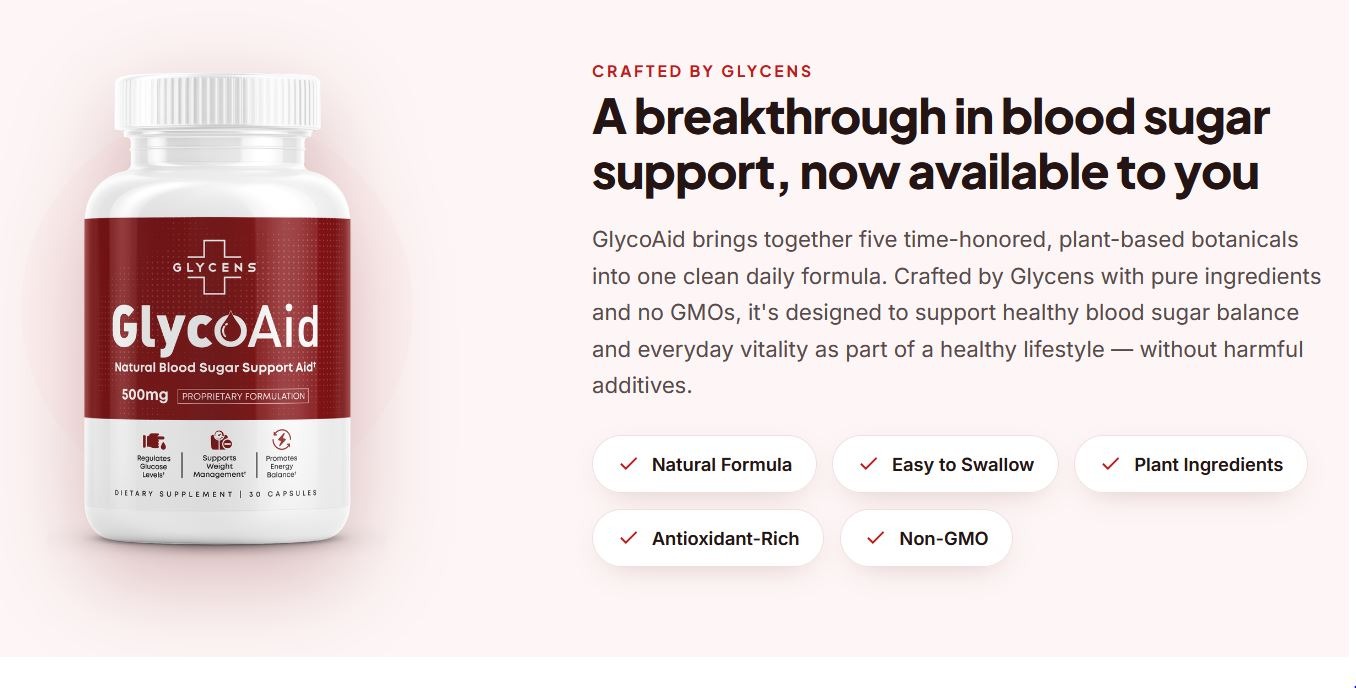
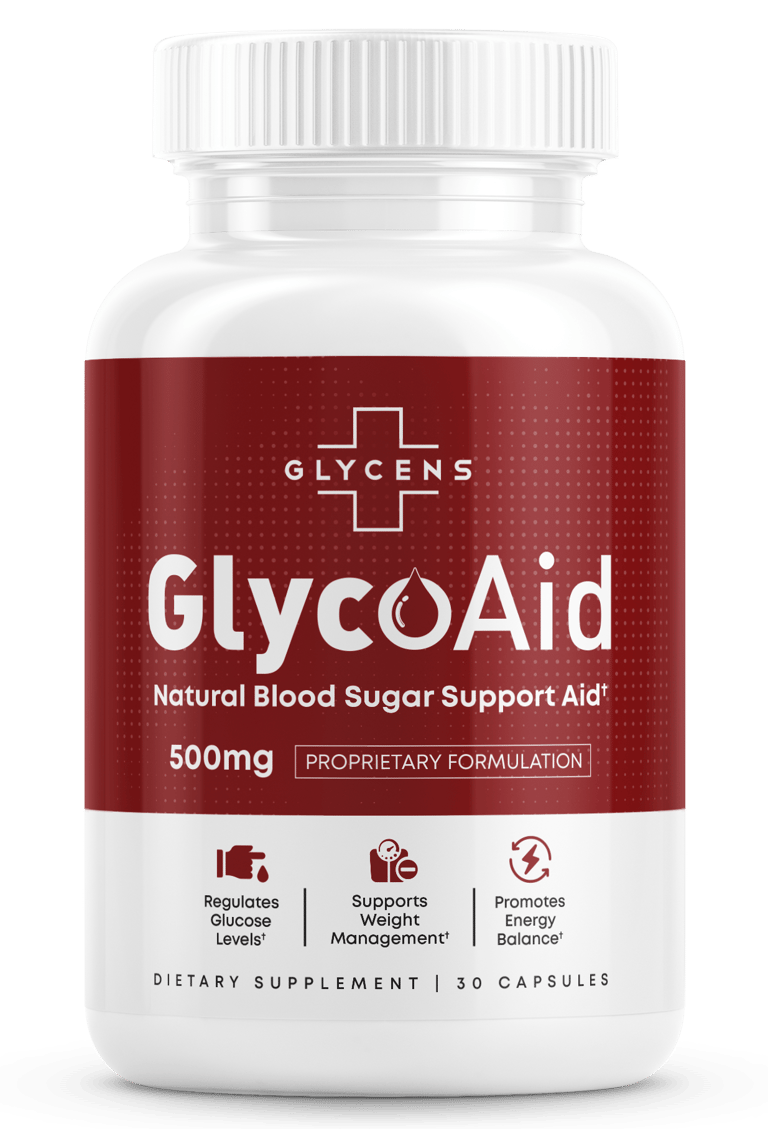
One version, branded under a company called Glycens, describes GlycoAid as a five-botanical blend of astragalus root, wild yam, goji berry, schisandra, and Solomon's seal — with no published Supplement Facts panel showing dosage amounts.
A separate official-looking site describes an entirely different formula built around chromium, alpha-lipoic acid, berberine, cinnamon extract, saffron extract, and resveratrol.
Another set of review pages credits the formula to an unnamed "medical researcher" and lists yarrow, juniper berry, milk thistle, and astragalus root as the active ingredients.
Yet another cluster of pages describes GlycoAid as a joint-health formula built around glucosamine, chondroitin, MSM, turmeric, and boswellia — unrelated to blood sugar at all.
In other words, if you search "GlycoAid ingredients," you'll find at least four different, non-overlapping ingredient lists attached to the same product name, published by different websites. That's not a minor discrepancy. It's a strong signal that "GlycoAid" functions less like a single branded product with a consistent formula and more like a name that gets recycled across different affiliate marketing campaigns and content mills, each pushing whatever version of the product they're currently promoting.
This matters enormously for anyone trying to make a purchasing decision, because it means you cannot assume that a review of "GlycoAid" you read on one site describes the same capsule you'd actually receive if you clicked through and ordered.
Practical takeaway: before buying anything called GlycoAid, find the actual product listing or official manufacturer page you'd be ordering from, and check that its Supplement Facts panel is fully disclosed — full ingredient names and per-ingredient milligram amounts, not just a list of botanical names with no dosages. If a site pushes you to "click here" without ever showing you a complete label, that's a reason to slow down.
A Framework for Evaluating Any Blood Sugar Supplement
Rather than taking any single review site's word for it, here's a five-part framework you can apply to GlycoAid — or to any similar product you're considering.
1. Is the manufacturer identifiable and transparent?
A legitimate supplement company will tell you who makes the product, where it's manufactured, and how to contact them with questions or complaints. Vague claims about a formula "developed by a medical researcher" without a named, verifiable person or credentials, or an "official website" that changes ownership or formula description across different mirror pages, are red flags rather than reassurances.
2. Is there a complete, disclosed ingredient list with dosages?
"Contains berberine, cinnamon, and chromium" tells you almost nothing on its own. The dose matters. Berberine's research base, for example, generally involves several hundred milligrams taken multiple times per day — far more than a "proprietary blend" that doesn't disclose amounts is likely to contain. If a label won't show you milligrams, you can't evaluate whether the formula matches the doses used in any of the studies being cited to sell it.
3. Does research exist on the ingredients — or on the finished product?
This is a distinction marketing pages often blur. Individual ingredients like cinnamon extract, berberine, chromium, and alpha-lipoic acid do have a real research literature behind them, with some studies showing modest effects on fasting glucose or insulin sensitivity in certain populations. That's genuinely worth noting. But research on an individual ingredient in isolation, often at doses different from what's in a given capsule, is not the same as clinical evidence that the finished, combined GlycoAid formula works. As of this writing, no independent, peer-reviewed clinical trial of the finished GlycoAid product has been published. That's true of the large majority of supplements in this category, not a unique flaw of GlycoAid specifically, but it's an important distinction to keep in mind.
4. Are the reviews independently verifiable?
This is where things get murkiest for GlycoAid. Search results turn up review pages claiming everything from "3,000 reviews" to "61,000 reviews," with average ratings clustered suspiciously around 4.9 to 4.98 out of 5 — a level of consistency that's uncommon even for well-loved products. More tellingly, the same testimonial, word-for-word, attributed to "Angela R. – Santa Fe, USA," appears across multiple unrelated review domains describing different aspects of the product (blood sugar on one site, nerve pain on another, joint mobility on a third). Identical testimonials recycled across otherwise unconnected websites are one of the clearest markers of templated affiliate content rather than genuine customer feedback.
That doesn't necessarily mean no real customer has ever benefited from GlycoAid. It does mean the "reviews" you'll find through a basic search are not a reliable way to gauge real-world results. If you want a genuine read on customer experience, verified purchase reviews on a marketplace like Amazon (where reviews are tied to confirmed purchases and platform moderation) are a more trustworthy starting point than standalone review blogs, many of which earn commission on the sale.
5. Does the marketing respect medical boundaries?
Reputable supplement marketing will include a visible disclaimer that the FDA hasn't evaluated the product's claims and that it isn't intended to diagnose, treat, cure, or prevent disease — and it should encourage you to consult a doctor, especially if you're already on diabetes medication. To its credit, at least one official GlycoAid page does include this standard disclaimer. Claims that go further than that, like promising the product will "lower your blood sugar" or "reduce your overall insulin resistance" in definitive terms, are worth treating with skepticism regardless of which supplement is making them.
Applying the Framework: Where GlycoAid Stands
Putting this together, here's a fair summary of where GlycoAid lands on each point:
Manufacturer transparency: Weak. Multiple conflicting brand identities and origin stories are attached to the GlycoAid name, making it hard to confirm who you'd actually be buying from.
Ingredient disclosure: Inconsistent. Some versions list ingredients without dosages; others list entirely different ingredients altogether, which should give any prospective buyer real pause.
Underlying research: Some individual ingredients commonly associated with GlycoAid — cinnamon extract, chromium, berberine, alpha-lipoic acid — have a genuine, if mixed, research base for supporting glucose metabolism. No clinical research exists on the finished, combined product itself.
Review authenticity: Weak. Duplicate testimonials and improbably uniform five-star ratings across unrelated domains suggest templated marketing content rather than an organic body of customer feedback.
Medical framing: Mixed. Some pages include appropriate FDA and consult-your-doctor disclaimers; others make more assertive, less hedged health claims.
None of this proves GlycoAid "doesn't work" — that's simply not something that can be established from marketing pages either way, and individual results with any supplement vary by person, dose, diet, and underlying health status. What it does establish is that the confident, uniform picture painted by most "GlycoAid Reviews" pages online doesn't hold up well once you compare them against each other.
Questions Worth Asking Before You Buy GlycoAid — or Any Similar Supplement
Can you find a full Supplement Facts panel, with dosages, on the actual page you'd order from? If not, ask the seller directly before purchasing.
Are you currently taking medication for diabetes or blood sugar management? Some ingredients associated with GlycoAid, including berberine and chromium, can interact with blood-sugar-lowering medications and increase the risk of hypoglycemia. This is a conversation for your doctor or pharmacist before you start, not after.
What's the actual return or refund policy, and is it enforced through a payment method you trust? Supplement sites in this space commonly advertise "money-back guarantees," but the reliability of that guarantee varies enormously by seller.
Would you make the same purchase decision if the five-star reviews weren't part of your calculation? Given how much of the review content around GlycoAid appears templated, it's worth evaluating the product on ingredients, dosage, and price rather than star ratings alone.
Who Might Reasonably Consider a Product Like GlycoAid
Someone who has already spoken with a doctor about their blood sugar, is not on medication with a hypoglycemia risk, and is looking for a well-dosed, third-party-tested supplement with ingredients like cinnamon extract or chromium as a complement to diet and exercise — not a replacement for either — is in a reasonable position to evaluate a product like this on its individual merits, provided they can get a fully disclosed label first.
Who Should Be More Cautious
Anyone currently taking insulin or other glucose-lowering medication, anyone pregnant or breastfeeding, and anyone considering a supplement as a substitute for prescribed treatment should talk to a healthcare provider before starting GlycoAid or any comparable product. Blood sugar management for diagnosed diabetes or prediabetes is not an area where "natural" automatically means "safe to self-manage," particularly given the risk of dangerous interactions between certain herbal compounds and prescription medications.
The Bottom Line
"GlycoAid Reviews" as they currently exist online are not a reliable guide to whether the product works — the reviews themselves show signs of being duplicated marketing content rather than independent customer feedback, and the product's own ingredient list isn't consistent from one source to the next. That's a more useful finding than another five-star writeup would be, because it tells you exactly what to check before spending money: get the actual label, confirm the dosages, talk to a healthcare provider if you're on other medication, and treat marketplace reviews with more weight than blog "reviews" that read like advertising copy. Whether or not GlycoAid specifically ends up being the right choice, that's the process worth applying to it — and to every other blood sugar supplement competing for your attention in the same crowded search results.
This article is for informational purposes only and is not medical advice. Consult a qualified healthcare provider before starting any new supplement, particularly if you have diabetes, prediabetes, or take medication that affects blood sugar.